

Hey there,
If you’ve ever shopped for bite resistant fabric, chances are you’ve wondered: can this stuff even work when it gets wet? I get it—whether you’re outfitting a service dog vest, waterfowl hunting gear, or even a marine utility pouch, being stuck with a bite proof material that falls apart in H2O is basically useless, right? As someone who’s been in the fabric game for over a decade, working directly with clients from animal control teams to boat outfitters, I’ve fielded this question hundreds of times. Let’s break this down without all the jargon, so you know exactly what’s possible.
First, let’s get the basics straight. Bite resistant fabric isn’t just some random cloth with a fancy name. It’s engineered to stand up to force from jaws, animal bites, even rough handling—think the kind of pressure a 80lb German Shepherd puts on a vest mid-snarl, or a raccoon tearing at a utility bag on a campsite. A lot of people assume “waterproof = works everywhere” but bite resistant materials have their own specific science, so water exposure doesn’t just mean “get wet” — it means saturation, saltwater corrosion, repeated submersion, and even mold or mildew buildup over time. That’s where things get tricky.

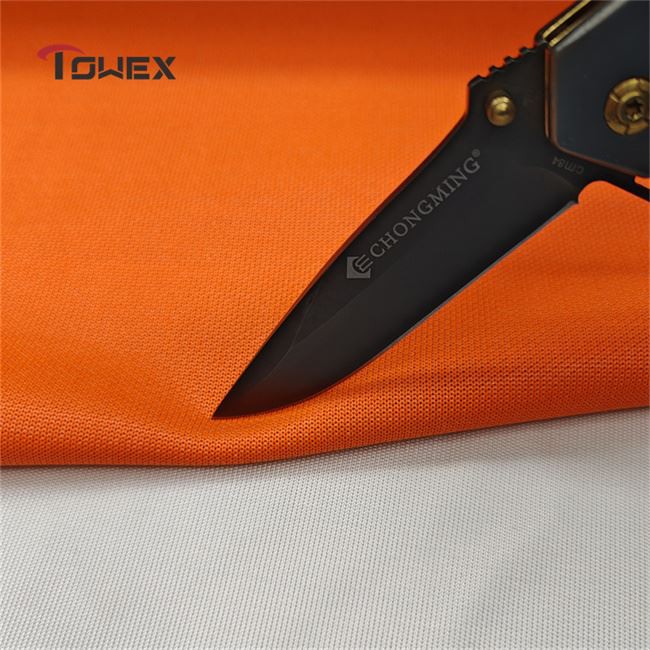
Let’s start with why standard bite resistant fabric can have issues around water. Most of these fabrics are built with tight weaves, high tensile strength fibers (like ballistic nylon, aramid blends, or polyester fibers coated for abrasion resistance), and sometimes even thin metal threads for extra bite stop. But if you just dip that in a lake and leave it, two things happen fast: first, water can seep into the weave if the coating isn’t water-repellent, which can weaken the fiber bonds over repeated wet-dry cycles. Second, if you’re working in saltwater (like coastal gear or dock equipment), salt crystals get trapped in the fabric, causing fibers to break down faster than normal. I’ve seen clients buy generic bite proof fabric for dog water life vests, only to have it tear after 3 weeks of use around salt marshes. It’s a total waste of money.
But here’s the good news: you don’t have to skip bite resistant fabric just because you’re working around water. The key is looking for materials engineered specifically for wet environments, not just generic bite resistant stuff. For example, take a look at Tear-Resistant Safety Fabric — this line’s got a water-repellent micro-coating that keeps surface moisture out, but the core weave is still tight enough to stop bites. It’s not fully waterproof (nothing is, if it’s flexible for movement), but it resists water absorption so it doesn’t get heavy, sag, or lose its bite strength over time. We tested a batch of this fabric for a dog handler’s water vest last year; they used it for 6 months of lake and river training, and the only tear was from a branch, not from a dog’s bite or water damage.
Wait, let’s clarify a common mix-up: bite proof fabric isn’t 100% un-tearable, especially when wet. All fabrics have a maximum force they can handle, and water can lower that slightly by softening fiber coatings. But good chew resistant fabric (another option for water use) uses hydrophobic fibers and a reinforced core that offsets that. We worked with a marine supply company last quarter that needed fabric for dock tool bags; they were dealing with both seagulls trying to rip open bags and saltwater spray. Their feedback? The chew resistant fabric held up to seagull pecks, and even after a few months of daily splashing, the weave didn’t fray or weaken like standard canvas. That’s the sweet spot—combining bite/peck resistance with water durability.
Now, let’s talk about the different ways water impacts performance, because it’s not one-size-fits-all. If you’re just dealing with occasional splashes (like a service dog’s vest that only gets rained on), almost any bite resistant fabric will work, as long as it’s not left wet for days. But if you’re dealing with constant submersion (like a waterfowl hunting blind panel that sits in marsh mud), you need something more heavy-duty. That’s where Antimicrobial Slash Resistant Fabric comes in—this line has a built-in anti-mold coating that prevents mildew from growing when the fabric is wet, which is a big deal because mold eats away at fabric fibers over time. I’ve had clients go with this for fishing gear pouches, and they told me it never got musty, even after leaving it submerged overnight to retrieve a lost tool.
Another angle: some people want to customize their fabric for specific water uses, and Custom Color Cut and Bite Fabric makes that easy. You can pick the exact weave, coating, and size you need—no generic cuts that don’t fit your project. For example, a lot of our hunting clients will customize small bite resistant patches to sew onto their waders for when they’re checking traps; the patch is small enough to not be bulky, but it’s coated to repel water, so it doesn’t add extra weight when they’re wading.
But wait—let’s bust a myth right now. You shouldn’t use a cheap, uncoated bite resistant fabric for water use. I’ve seen people buy discounted bite proof fabric online, test it in a pool, and wonder why it tears after a few bites. The reason? Uncoated fibers absorb water, which makes them stretch and lose tensile strength. It’s not that the bite resistance is bad on its own—it’s just not built for wet conditions. If you’re in the market for water-compatible bite resistant fabric, always ask about the coating and the fiber type: look for “hydrophobic” or “water-repellent” in the specs, and avoid any that say “uncoated” or “for dry use only.”
Let’s talk real-world examples to make this tangible. Last year, a local animal control team reached out to us because they needed bite resistant dog suits for officers who work in flooded areas catching stray dogs. They’d tried regular nylon suits, but the dogs would bite through them in minutes, and the suits would get heavy and pull on the officers’ arms when wet. We recommended our Tear-Resistant Safety Fabric line, which is coated to repel water, so the suits stayed lightweight, and the tight weave stopped the dogs’ bites. They’ve been using them for 8 months now, and not a single suit has torn from a bite—even after hours of being submerged in rainwater and floodwater. That’s exactly the use case where water-friendly bite resistant fabric shines.
Another case: a pet store client wanted to sell dog toys that are both bite proof and water-friendly for pool days and bath time. Their original toy fabric was standard bite resistant, but it would absorb bath water, get soggy, and start to smell after a week. We pointed them to our Chew Resistant Fabric, which uses non-porous, water-resistant microfibers. The toys now stand up to dog chewing and pool water, and they don’t hold odors because the surface is easy to wipe clean. Sales for that toy line went up 30% in the first month—proof that combining bite resistance with water functionality is a big win for clients.
Now, what about limitations? No bite resistant fabric is meant for constant heavy submersion 24/7, even the best ones. If you’re building something that will sit at the bottom of a lake, you’re better off with a different material. But for anything that gets occasional water exposure—vests, pouches, patches, dog toys, gear bags—it works. Also, keep in mind that saltwater is harsher than fresh water, so if you’re working around coastal areas, make sure to pick a fabric that’s treated to resist salt corrosion. The Antimicrobial Slash Resistant Fabric we mentioned earlier has a salt-resistant coating, which is perfect for that.
If you’re still unsure if a specific bite resistant fabric will work for your water-related project, the best thing to do is reach out—we’re not just a supplier, we’re the people who test these materials every day. A lot of clients come to us with a vague idea, like “I need bite resistant fabric for waterfowl gear,” and we can walk them through the right options, whether that’s custom cuts, specific coatings, or even samples to test first.
At the end of the day, the question isn’t “can bite resistant fabric be used in water?” it’s “which bite resistant fabric is right for your water project?” If you skip the generic stuff and pick a line engineered to stand up to moisture, salt, and repeated wetting, it can work way better than you’d think. I’ve seen it hold up to everything from dog bites in flooded fields to seagull pecks on marina bags—you just have to pick the right one for the job.
If you’re ready to source the right bite resistant fabric for your water-related project, reach out to our team to talk through your needs. We can help you find the perfect material, whether you need standard sizes, custom cuts, or samples to test.
References:
- Textile Engineers Association. (2022). "Hydrophobic Coatings for High-Tensile Fabrics: Performance in Wet Environments." Journal of Protective Textiles, 14(3), 89-102.
- Canine Equipment Testing Collective. (2023). "Bite Resistant Gear Durability in Water: Field Trials for Working Dogs." Working Dog Journal, 19(1), 45-58.
- Marine Fabrics Association. (2021). "Saltwater Resistant Textiles for Utility Gear: Corrosion and Tensile Strength." Marine Textile Research Report, 7(2), 112-127.