

I'm a supplier of cut resistant fabric, and today I wanna talk about a question that often pops up: Does cut resistant fabric stretch?
Let's start by understanding what cut resistant fabric is. Cut resistant fabrics are designed to protect the wearer from cuts, lacerations, and abrasions. They're used in a wide range of industries, from construction and manufacturing to law enforcement and military. These fabrics are made from various materials, including high - strength fibers like Kevlar, Dyneema, and Spectra.
Now, back to the question of stretch. The short answer is: it depends. Some cut resistant fabrics do stretch, while others don't. It all boils down to the materials used and the manufacturing process.
Fabrics That Stretch
There are cut resistant fabrics that are engineered to have some degree of stretch. These are often used in applications where flexibility and freedom of movement are crucial. For example, in industries where workers need to perform a lot of bending, reaching, and stretching, a stretchy cut resistant fabric can make a huge difference.
One reason for this stretch is the addition of elastic fibers during the manufacturing process. Spandex is a common elastic fiber that can be blended with the cut - resistant fibers. This blend allows the fabric to stretch and then return to its original shape. It's like having the best of both worlds: protection and flexibility.
Let's say you're a construction worker. You're constantly moving around, climbing ladders, and handling tools. A stretchy cut resistant fabric will allow you to move freely without feeling restricted. You won't have to worry about the fabric tearing or bunching up when you make sudden movements.
Fabrics That Don't Stretch
On the other hand, there are cut resistant fabrics that have very little to no stretch. These fabrics are typically made from high - modulus fibers that are extremely strong but rigid. Kevlar is a prime example. Kevlar fibers have a high tensile strength, which means they can withstand a lot of force without breaking. However, they don't stretch much.
Fabrics made from these non - stretchy materials are often used in applications where maximum protection is required. For example, in the military or law enforcement, officers need to be protected from sharp objects and knives. A non - stretchy cut resistant fabric can provide a more solid and reliable barrier.
If you're in a high - risk situation where a cut could be life - threatening, a non - stretchy fabric might be the better choice. It won't give way easily when it comes into contact with a sharp object, providing a more consistent level of protection.
Factors Affecting Stretch
There are several factors that can affect whether a cut resistant fabric stretches or not.
Fiber Type: As mentioned earlier, different fibers have different properties. Fibers like spandex and elastane are known for their stretchability, while high - modulus fibers like Kevlar and Dyneema are more rigid.
Weave Pattern: The way the fabric is woven also plays a role. A tight weave can limit stretch, while a looser weave may allow for more movement. For example, a plain weave might be less stretchy compared to a twill or a jersey weave.
Blending: Blending different fibers together can change the stretch characteristics of the fabric. By combining a cut - resistant fiber with an elastic fiber, you can create a fabric that has both protection and stretch.
Applications and Their Stretch Requirements
Let's take a look at some specific applications and how stretch requirements vary.
Industrial Work: In industrial settings such as factories and warehouses, workers need to move around a lot. A stretchy cut resistant fabric is ideal here. It allows workers to perform tasks like lifting, carrying, and operating machinery without feeling constricted. For instance, if you're handling sharp tools or working with heavy equipment, you want a fabric that can move with you.
Law Enforcement and Military: In these fields, protection is the top priority. While some movement is necessary, a non - stretchy or minimally stretchy cut resistant fabric is often preferred. Officers need a fabric that can withstand the impact of a knife or other sharp objects. They rely on the fabric to provide a strong and stable barrier.
Outdoor Activities: For activities like hunting or fishing, a cut resistant fabric with some stretch can be beneficial. It allows for a full range of motion while still providing protection. You can move through bushes, handle fishing hooks, or use hunting knives without worrying about getting cut.
Our Product Range
As a cut resistant fabric supplier, we offer a wide range of products to meet different needs.
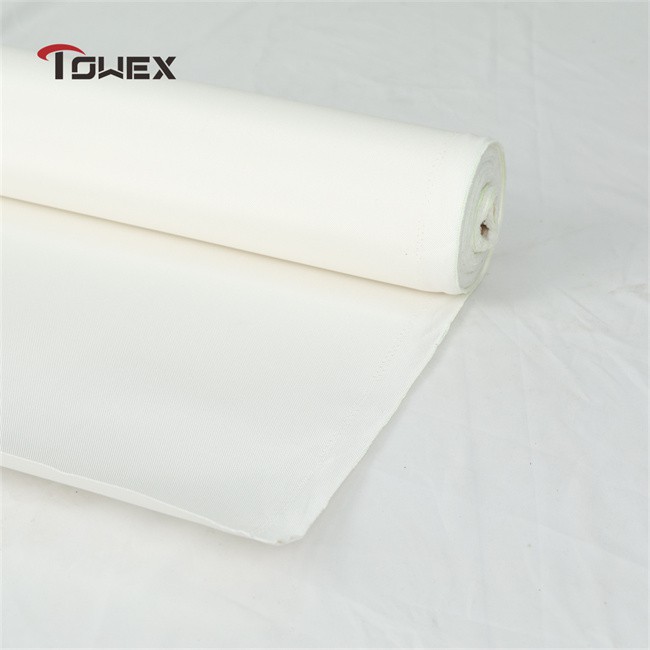
At Towex New Materials, we specialize in producing elastic, cut-resistant fabrics. By incorporating materials such as spandex (including custom Lycra), we can achieve various levels of cut resistance-ranging from A6 to A9-in accordance with U.S. safety standards. These fabrics are ideally suited for use in products such as gloves and protective clothing.
We have High-Visibility Cut Resistant Fabric, which is great for industrial workers. It not only provides cut protection but also has high - visibility properties, making workers more visible in low - light conditions. This fabric has a good amount of stretch, allowing for easy movement on the job.
Our Knife Resistant Fabric is designed for high - risk situations. It's made from high - strength fibers and has very little stretch. It provides excellent protection against knives and other sharp objects, making it suitable for law enforcement and security personnel.
If you're into outdoor activities or need a more tactical look, our Camo Tactical Cut - Proof Fabric is a great option. It combines cut resistance with a camouflage pattern and has a balanced amount of stretch for easy movement in the field.
Conclusion
So, does cut resistant fabric stretch? Well, it's not a one - size - fits - all answer. Some fabrics stretch, and some don't, depending on the materials, manufacturing process, and intended use.
If you're in the market for cut resistant fabric, it's important to consider your specific needs. Whether you need maximum protection with minimal stretch or a combination of protection and flexibility, there's a fabric out there for you.
If you're interested in purchasing our cut resistant fabrics, feel free to reach out to us for more information. We're here to help you find the perfect fabric for your application.

References
- "Textile Science and Technology: Fibers, Yarns, Fabrics, and Nonwovens" by Mark G. Koenig
- "Handbook of Technical Textiles" edited by Subhash Anand and Stephen J. Burkinshaw