

Hey there! As a supplier of stab resistant fabric, I've gotten a ton of questions about how this amazing stuff resists abrasion. Let's dive right in and break it down.
First off, what exactly is stab resistant fabric? Well, it's a special kind of material designed to protect against stabbing and slashing. It's used in all sorts of applications, from protective gear for law enforcement and security personnel to safety equipment in industrial settings. And one of the key features that makes it so useful is its ability to resist abrasion.
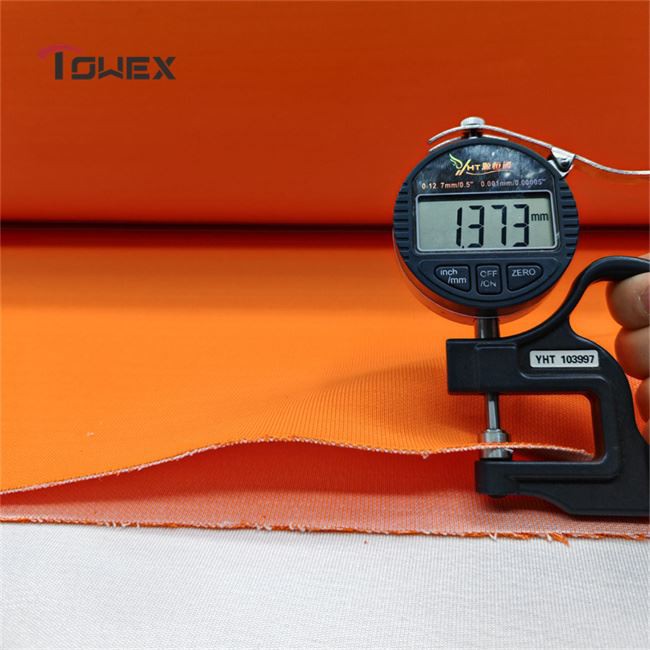
So, how does it do that? There are a few different factors at play. One of the main things is the materials used to make the fabric. Most stab resistant fabrics are made from high-strength fibers like Ultra-High-Molecular-Weight Polyethylene (UHMWPE), aramid fibers, or a combination of both. These fibers are incredibly strong and durable, which gives the fabric its resistance to abrasion.
UHMWPE fibers, for example, have a very high tensile strength, which means they can withstand a lot of pulling and stretching without breaking. They're also very lightweight and flexible, which makes them comfortable to wear. Aramid fibers, on the other hand, are known for their heat resistance and high modulus, which gives them excellent stiffness and dimensional stability. When these fibers are combined in a fabric, they create a material that's both strong and flexible, able to resist both stabbing and abrasion.
Another factor that contributes to the abrasion resistance of stab resistant fabric is the way it's constructed. Many stab resistant fabrics are woven or knitted in a way that creates a tight, dense structure. This structure helps to prevent the fibers from being pulled out or damaged by abrasion. For example, some fabrics use a double weave or a special knitting pattern that creates multiple layers of fibers, which adds an extra layer of protection against abrasion.
In addition to the materials and construction, the surface treatment of the fabric can also play a role in its abrasion resistance. Some stab resistant fabrics are treated with special coatings or finishes that help to reduce friction and protect the fibers from wear and tear. These coatings can be made from a variety of materials, such as silicone, polyurethane, or Teflon. They can also be designed to provide additional properties, such as water resistance or flame retardancy.
Let's take a closer look at some of the different types of stab resistant fabric and how they resist abrasion.
Puncture Resistant Fabric
Puncture resistant fabric is designed to protect against sharp objects like knives and needles. It's often used in gloves, aprons, and other protective gear for workers in industries like construction, manufacturing, and healthcare. Puncture Resistant Fabric is typically made from high-strength fibers like UHMWPE or aramid, and it's woven or knitted in a way that creates a tight, dense structure. This structure helps to prevent the sharp object from penetrating the fabric and reaching the skin.
Cut Proof Fabric
Cut proof fabric is similar to puncture resistant fabric, but it's designed to protect against cutting and slicing attacks. It's often used in gloves, sleeves, and other protective gear for workers in industries like meat processing, glass manufacturing, and metalworking. Cut Proof Fabric is typically made from high-strength fibers like UHMWPE or aramid, and it's woven or knitted in a way that creates a tight, dense structure. This structure helps to prevent the blade from cutting through the fabric and reaching the skin.
Stab Resistant Fabric High-Performance
High-performance stab resistant fabric is designed to provide the highest level of protection against stabbing attacks. It's often used in body armor, shields, and other protective gear for law enforcement and military personnel. Stab Resistant Fabric High-Performance is typically made from a combination of high-strength fibers like UHMWPE and aramid, and it's woven or knitted in a way that creates a tight, dense structure. This structure helps to absorb and distribute the energy of the stabbing attack, reducing the risk of injury.
Anti Stab Fabric
Anti stab fabric is a type of stab resistant fabric that's designed to be lightweight and flexible. It's often used in clothing, such as jackets and vests, for people who need to protect themselves from stabbing attacks. Anti Stab Fabric is typically made from a combination of high-strength fibers like UHMWPE and aramid, and it's woven or knitted in a way that creates a tight, dense structure. This structure helps to prevent the sharp object from penetrating the fabric and reaching the skin.
Anti-Stab UHMWPE Fabric
Anti-stab UHMWPE fabric is a type of stab resistant fabric that's made primarily from Ultra-High-Molecular-Weight Polyethylene (UHMWPE) fibers. UHMWPE is a very strong and lightweight material that's known for its excellent abrasion resistance. Anti-Stab UHMWPE Fabric is typically woven or knitted in a way that creates a tight, dense structure, which helps to prevent the sharp object from penetrating the fabric and reaching the skin.
So, there you have it! That's how stab resistant fabric resists abrasion. As a supplier of stab resistant fabric, I'm proud to offer a wide range of high-quality products that are designed to provide the best possible protection against stabbing, cutting, and abrasion. Whether you're a law enforcement officer, a security guard, an industrial worker, or just someone who wants to protect themselves from harm, I've got the perfect fabric for you.
If you're interested in learning more about our stab resistant fabric products or if you have any questions, please don't hesitate to reach out. We're here to help you find the right solution for your needs. Let's start a conversation and see how we can work together to keep you safe.
References
- "High-Performance Fibers for Protective Textiles," by A. R. Horrocks and S. C. Anand
- "Handbook of Technical Textiles," edited by A. R. Horrocks and S. C. Anand
- "Textile Science," by J. W. S. Hearle, J. Lomas, and S. Blackburn